RIDDOR Training
What must be reported under RIDDOR — major injuries, over-seven-day injuries, reportable diseases, dangerous occurrences, and how to actually make a report.
What this course covers
- What this course covers
- What is RIDDOR?
- The Incident Contact Centre (ICC)
- Who must report an incident?
- Recording vs reporting: the over-three-day rule
- What must be reported?
- Major injuries
- Over-seven-day injuries
- Reportable diseases
- Reportable dangerous occurrences
- Reporting possible risk
- Why reporting matters — and summary
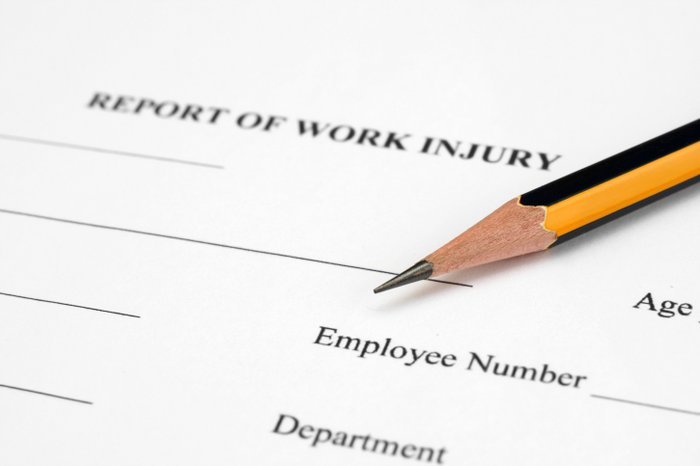
RIDDOR — the Reporting of Injuries, Diseases and Dangerous Occurrences — is another important building block in keeping yourself and everyone around you safe at work. It's best studied alongside the Health and Safety course, since the two overlap a great deal in practice.
Injuries, diseases and dangerous occurrences all fall into specific categories, and each must be reported in line with RIDDOR (originally the 1995 regulations, since updated). The information gathered from these reports is then used to identify patterns and reduce risk across workplaces generally — your individual report genuinely feeds into a bigger safety picture, not just a filing cabinet.
The Incident Contact Centre (ICC) is the UK's reporting service for work-related health and safety incidents. Phoning the ICC is usually the fastest and simplest way to report something, though email, fax, post and online reporting are all options too. Once you've submitted a report, it's sent back to you to keep for your own records — always hang onto that copy.
RIDDOR places a legal duty on three groups specifically:
- Employers
- Self-employed people
- People in control of premises
As an employee, you won't usually be the one submitting the formal report yourself — but you have a clear duty to tell whoever is responsible (your employer, or the person in control of the premises) as soon as something reportable happens.
Not everything that happens needs a formal RIDDOR report — some incidents just need to be recorded instead. An accident that leaves someone incapacitated for more than three consecutive days must be recorded, but doesn't need to be reported. If you're an employer, keeping the accident book required under the Social Security (Claims and Payments) Regulations 1979 is sufficient for this.
As an employee, you must tell your employer or the person in control of the premises if you've been injured at work, witnessed a dangerous occurrence, or have a work-related disease that's been certified by a doctor. Filling in the accident book when something happens is one of your genuine responsibilities here, not just paperwork for someone else to worry about.
An incident must be reported if it's a direct result of work activity, or happens on work premises. The categories that trigger a report are:
- Deaths
- Major injuries
- Over-seven-day injuries
- Injuries to non-workers (members of the public)
- Certain work-related diseases
- Dangerous occurrences
Each of these is defined precisely by the HSE, and the next few sections walk through exactly what falls into each category.

The HSE defines "major injuries" as:
- A fracture (other than to fingers, thumbs or toes)
- Amputation
- Dislocation of the shoulder, hip, knee or spine
- Loss of sight, temporary or permanent
- A chemical or hot metal burn to the eye, or any penetrating eye injury
- Injury from an electric shock or electrical burn leading to unconsciousness, or requiring resuscitation or hospital admission for more than 24 hours
- Any injury leading to hypothermia, heat-induced illness or unconsciousness, or requiring resuscitation or hospital admission for over 24 hours
- Unconsciousness caused by asphyxia, or exposure to a harmful substance or biological agent
- Acute illness requiring medical treatment, or loss of consciousness, from absorbing a substance by inhalation, ingestion or through the skin
- Acute illness requiring medical treatment where there's reason to believe it resulted from exposure to a biological agent, its toxins, or infected material
Since 6 April 2012, a reportable injury is one sustained at work that keeps someone away from work, or unable to perform their full normal duties, for more than 7 days — and it must not already qualify as a "major injury" (which is reported under its own category instead).
An injury that keeps someone off their normal duties for more than 3 days, but not more than 7, still needs to be recorded by the employer — it just doesn't need to be formally reported to the HSE.
The HSE's reportable diseases span several categories:
- Certain poisonings — such as acrylamide monomer, lead, mercury and their derivatives
- Skin diseases — occupational dermatitis, skin cancer, chrome ulcer, oil folliculitis/acne
- Lung diseases — occupational asthma, farmer's lung, pneumoconiosis, asbestosis, mesothelioma
- Infections — leptospirosis, hepatitis, tuberculosis, anthrax, legionellosis, tetanus
- Other conditions — occupational cancer, certain musculoskeletal disorders, decompression illness, hand-arm vibration syndrome

A "dangerous occurrence" is a near-miss with serious potential, even where nobody was actually hurt. The HSE's list includes:
- Collapse, overturning or failure of load-bearing parts of lifts and lifting equipment
- Plant or equipment coming into contact with overhead power lines
- Electrical short circuit or overload causing fire or explosion
- Any unintentional explosion, misfire, a demolition failing to cause its intended collapse, material projected beyond a site boundary, or injury caused by an explosion
- Industrial radiography or irradiation equipment failing to de-energise or return to a safe position after its intended exposure period
- Breathing apparatus malfunctioning during use or during pre-use testing
- Failure of load-bearing fairground equipment, or derailment or unintended collision of cars or trains
- A dangerous substance being transported by road catching fire or being released
- The unintended collapse of a building or structure under construction, alteration or demolition where more than five tonnes of material falls, or the collapse of a wall, floor or false-work (except in offshore workplaces)
- An explosion or fire that suspends normal work for more than 24 hours
- Accidental release of any substance that could damage health
Not every RIDDOR-relevant situation involves an injury, disease or dangerous occurrence that's already happened. Sometimes you'll spot something that could cause harm in future — and you have a genuine duty to report that too, to your supervisor or employer, so it can be addressed before anyone is hurt. If the risk isn't resolved, keep reporting it as unresolved until proper measures are actually put in place — a single report that goes nowhere isn't the end of your responsibility.

The Labour Force Survey runs four times a year and provides a picture of the UK labour market, including an estimate of actual workplace injury rates. That estimate typically runs at around twice the number of injuries actually reported to RIDDOR — a real gap between what happens and what gets recorded, and one that better reporting habits (yours included) can help close.
- RIDDOR exists to record injuries, diseases and dangerous occurrences in the workplace
- That information is used to build safer workplaces generally
- Employers, self-employed people and those in control of premises are responsible for reporting
- As an employee, it's your responsibility to report incidents to your employer or the person in control of the premises
- Reportable incidents must be a direct result of work activity or work premises
- Beyond incidents that have already happened, it's also your duty to report situations that could become hazardous in future